The world of art conservation has entered a new era with the recent unveiling of a groundbreaking project by the Van Gogh Museum in Amsterdam. In an unprecedented fusion of art and technology, the museum has employed advanced artificial intelligence to reconstruct and restore a lost Vincent van Gogh painting, bringing a piece of art history back to life after more than a century of absence. This ambitious undertaking not only showcases the potential of modern technology in cultural preservation but also opens new dialogues about authenticity, interpretation, and the evolving role of institutions in safeguarding artistic heritage.
The lost work in question is believed to have been painted by Van Gogh during his prolific period in the late 1880s, a time of intense creativity and emotional turbulence for the artist. Historical records, including letters Van Gogh wrote to his brother Theo, reference the existence of this particular piece, described as a vibrant landscape infused with his characteristic bold brushstrokes and emotional depth. However, the physical painting itself had been lost to time, likely destroyed or painted over by the artist himself—a common practice when canvases were scarce. For decades, art historians had only these written descriptions and preliminary sketches to imagine what the completed work might have looked like.
Traditional methods of art restoration rely on physical evidence, meticulous manual work, and the restorer's deep understanding of the artist's techniques and materials. However, when no physical painting exists, these approaches fall short. This is where artificial intelligence offered a revolutionary solution. The Van Gogh Museum collaborated with a team of AI specialists, data scientists, and art historians to develop a custom deep learning model trained exclusively on Van Gogh's body of work. The AI was fed high-resolution images of his known paintings, studying everything from his color palettes and brushstroke patterns to his compositional tendencies and thematic preferences.
The process was far from simple automated generation. The team first consolidated all available data on the lost painting. This included digitized versions of Van Gogh’s letters, which provided clues about the subject matter, colors, and his own feelings about the work. They also integrated analyses of the artist's other paintings from the same period, ensuring temporal consistency. The AI algorithm did not create from nothing; it synthesized this vast repository of structured knowledge, making informed predictions about how Van Gogh would have likely completed the painting. It was a painstaking process of algorithmic interpretation, constantly refined by human experts who guided the AI to avoid anachronisms or stylistic inconsistencies.
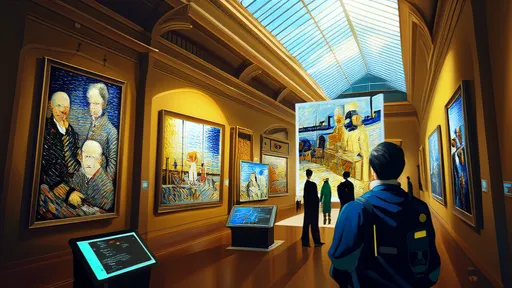
The result is a stunning digital resurrection. The AI-reconstructed painting displays the tumultuous energy and luminous color that define Van Gogh's most celebrated works. The swirling skies, the expressive application of paint, and the emotional resonance all feel authentically Van Gogh. The museum has been careful to present it not as a rediscovered original but as a highly informed digital reconstruction. It is a scholarly hypothesis rendered in visual form, a powerful tool for understanding rather than a replacement for the lost original. This transparency is crucial in maintaining ethical standards in art presentation and conservation.
This project's implications extend far beyond a single painting. It demonstrates a powerful new application of AI in the humanities. Museums worldwide hold fragments, sketches, and documented records of lost cultural artifacts. This technology provides a template for reconstructing ancient sculptures from fragments, visualizing ruined architectural sites, or even piecing together faded manuscripts. It allows current and future generations to experience a fuller picture of our cultural past, bridging gaps created by time, war, or accident. The Van Gogh Museum has pioneered a methodology that could become standard practice in cultural institutions across the globe.
Naturally, such an endeavor sparks complex questions. Can a machine truly capture the soul and intention of a tormented genius like Van Gogh? Critics might argue that art is inherently human, a product of emotion and spontaneous creativity that algorithms cannot replicate. The museum addresses this by emphasizing the collaborative nature of the project. The AI was a tool, akin to a sophisticated brush, but the vision and oversight were profoundly human. Art historians set the parameters, interpreted the data, and made critical judgments throughout the process. The outcome is a testament to a partnership between human expertise and machine capability, not a triumph of one over the other.
Furthermore, the project reinforces the Van Gogh Museum's role not just as a custodian of physical objects but as a dynamic center for research and innovation. By embracing cutting-edge technology, the institution ensures its relevance and continues to engage audiences with fresh perspectives on a well-known artist. It invites the public to ponder fascinating questions: What is the true essence of a work of art? Is it the physical object, the artist's intention, or the experience it evokes in the viewer? This reconstruction challenges traditional definitions and encourages a more expansive view of art historical study.
Looking ahead, the success of this AI-driven restoration paves the way for even more ambitious projects. One can imagine reconstructing entire lost collections or visualizing the original colors of classical sculptures that have been bleached by time. The potential for education is immense, offering students and enthusiasts a more complete and immersive understanding of art history. The Van Gogh Museum has set a precedent, proving that technology, when used thoughtfully and respectfully, can be a powerful ally in the mission to preserve and interpret our shared cultural heritage for generations to come.
In conclusion, the AI-assisted restoration of a lost Van Gogh masterpiece stands as a landmark achievement at the intersection of art and science. It is a bold step forward that honors the past while embracing the future. By leveraging technology to illuminate history, the Van Gogh Museum has not only recovered a missing piece of its iconic artist's story but has also redefined the possibilities of conservation, ensuring that the vibrant, tumultuous world of Vincent van Gogh continues to inspire and captivate the world in ever-evolving ways.
By /Sep 11, 2025
By /Sep 11, 2025
By /Sep 11, 2025
By /Sep 11, 2025
By /Sep 11, 2025
By /Sep 11, 2025
By /Sep 11, 2025
By /Sep 11, 2025
By /Sep 11, 2025
By /Sep 11, 2025
By /Sep 11, 2025
By /Sep 11, 2025
By /Sep 11, 2025
By /Sep 11, 2025
By /Sep 11, 2025
By /Sep 11, 2025
By /Sep 11, 2025
By /Sep 11, 2025
By /Sep 11, 2025
By /Sep 11, 2025
