The sprawling metropolis of Istanbul, a city that physically and symbolically straddles two continents, provides a uniquely potent stage for the exploration of cultural identity. The Istanbul Biennial, a contemporary art exhibition of international repute, has repeatedly used this unique positioning to delve into the complex, often contested, questions of what it means to belong to the vast and varied landmass of Eurasia. It is more than an art event; it is a ongoing, critical conversation held in the city's ancient halls and modern galleries, a conversation about history, memory, and the fluidity of belonging in a globalized world.
Historically, the Biennial has never shied away from the political and social weight of its location. Curators have consistently framed the exhibition within the context of the city's layered past—as Byzantium, as Constantinople, and finally as Istanbul—and by extension, the history of the empires and nations that constitute Eurasia. This is not an exercise in nostalgia but a rigorous excavation. The artworks selected often act as archaeological tools, digging through the strata of Ottoman grandeur, Soviet modernism, and post-colonial nationalisms to uncover narratives that have been suppressed, forgotten, or deliberately erased. The Biennial posits that to understand the present identity crisis, one must first confront the ghosts of the past that still walk the streets of Istanbul and echo across the steppes.
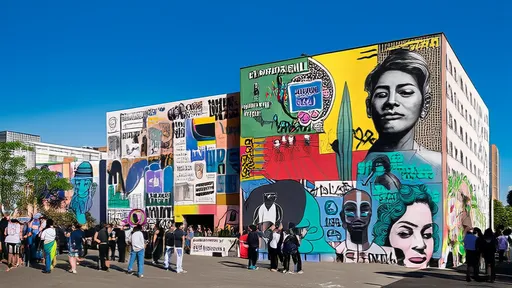
A central, recurring theme is the very idea of borders—both tangible and imagined. Eurasia is a construct, a geographical term for a space that defies easy categorization. The Biennial’s strength lies in its ability to showcase art that challenges these cartographic certainties. Through installations, video art, and performances, artists explore the permeability of boundaries. A work might juxtapose the harsh, policed border between Turkey and Armenia with the shared culinary traditions that exist on both sides. Another might trace the journey of a folk melody, showing how it mutates and adapts as it moves from the Caucasus Mountains to the Anatolian Plateau, refusing to be contained by national anthems or passport controls. The message is clear: cultural identity flows like water, seeping through the cracks in man-made walls.
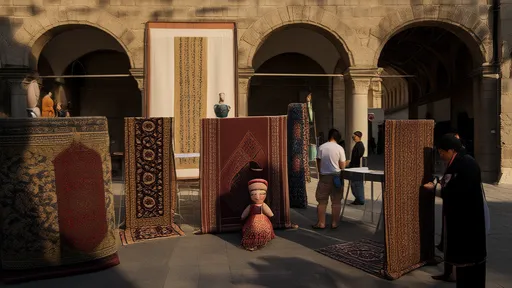
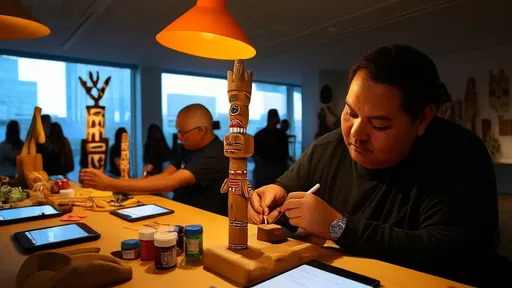
In this exploration, the concept of hybridity emerges as a crucial, perhaps defining, characteristic of the Eurasian experience. The Biennial actively seeks out artists whose work embodies this fusion—artists with mixed heritage, diasporic experiences, or those working in transnational collectives. Their art is a living testament to the fact that identity is not a pure, isolated essence but a constant process of negotiation and blending. You see it in a painting that merges Persian miniature techniques with European abstract expressionism, or a sculpture that uses traditional Siberian woodworking to comment on modern consumerism. This is not a dilution of culture but its evolution, a creative and often defiant response to a history of conquest, migration, and exchange.
Furthermore, the Biennial serves as a crucial platform for voices from Central Asia and the Caucasus, regions often overlooked by the Western-centric art world. By bringing these perspectives into dialogue with those from Turkey, Russia, and Europe, the exhibition constructs a more nuanced and complete picture of Eurasia. It highlights shared struggles—such as the complex relationship with a Soviet past or the challenges of resource extraction—while also celebrating distinct cultural expressions. This act of inclusion is a political statement in itself, challenging the hegemony of traditional art centers and asserting that the discourse on global culture is incomplete without these vital contributors.
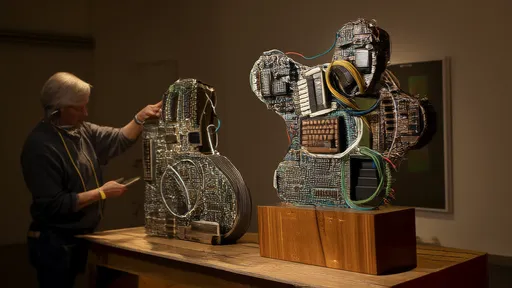
Memory, both collective and individual, is another powerful undercurrent. In a region scarred by rapid modernization, political upheaval, and sometimes violence, the act of remembering becomes a radical one. Many powerful works in the Biennial’s history have functioned as archives of loss and resilience. They might consist of meticulously assembled oral histories from a disappearing village, photographs documenting architectural relics of a forgotten utopian project, or personal artifacts arranged to tell a story that official history books ignore. These artworks do not simply document the past; they actively participate in the process of mourning, understanding, and, ultimately, healing. They ask how a society can build a future if it has not come to terms with its past.
Ultimately, the Istanbul Biennial does not seek to provide a single, definitive answer to the question of Eurasian cultural identity. Such a goal would be futile, reductive, and contrary to the spirit of the region it examines. Instead, the exhibition thrives on its ability to hold multiple, contradictory truths in tension. It presents identity as a question, not an answer; a journey, not a destination. It shows that to be Eurasian is to exist in a state of productive ambiguity, to carry within oneself the traces of countless histories, languages, and traditions. In the hauntingly beautiful and perpetually unfinished city of Istanbul, the Biennial reminds us that identity, like the waters of the Bosphorus, is constantly in motion, connecting worlds rather than separating them.
By /Sep 11, 2025
By /Sep 11, 2025
By /Sep 11, 2025
By /Sep 11, 2025
By /Sep 11, 2025
By /Sep 11, 2025
By /Sep 11, 2025
By /Sep 11, 2025
By /Sep 11, 2025
By /Sep 11, 2025

By /Sep 11, 2025
By /Sep 11, 2025
By /Sep 11, 2025
By /Sep 11, 2025
By /Sep 11, 2025
By /Sep 11, 2025
By /Sep 11, 2025
By /Sep 11, 2025

By /Sep 11, 2025

By /Sep 11, 2025
