In a bold move that signals a new era for contemporary art, Paris's Centre Pompidou has unveiled a groundbreaking exhibition dedicated entirely to collaborative works between artificial intelligence systems and human artists. The show, simply titled "Co-Creations," represents one of the most significant institutional acknowledgments of AI's growing role in the creative process, challenging traditional notions of authorship, creativity, and the very definition of art in the 21st century.
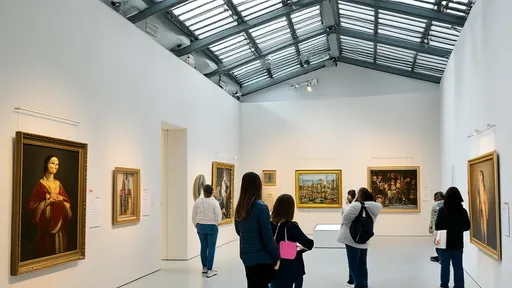
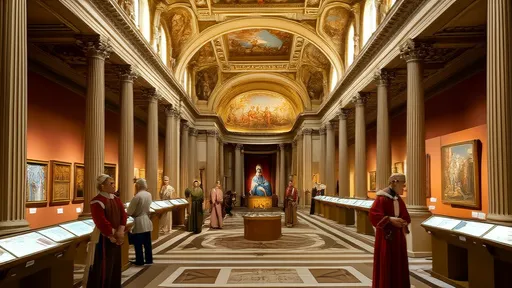
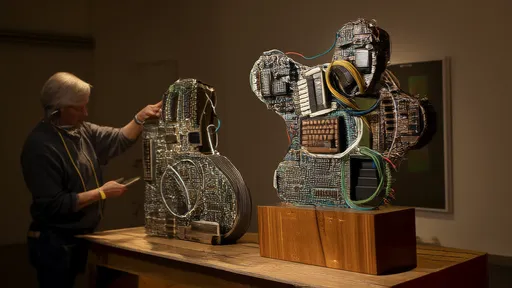
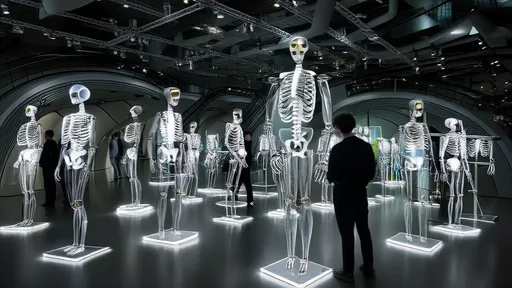
Walking through the minimalist halls of the museum, visitors are immediately struck by the diversity and depth of the works on display. From generative digital paintings and algorithmically composed music to interactive installations and AI-assisted sculptures, the exhibition showcases a wide spectrum of collaborative possibilities. What unites these pieces is not a single style or medium, but a shared exploration of the dialogue between human intention and machine execution. Each work tells a story of partnership, where the artist guides, influences, or responds to the output of an AI system, resulting in creations that neither could achieve alone.
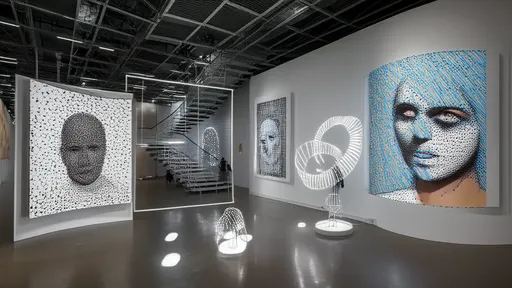
One of the most talked-about pieces is "Neural Echoes" by French artist Élise Dubois, who worked with a deep learning model trained on centuries of portrait paintings. The AI generated thousands of facial compositions, which Dubois then curated, altered, and physically painted onto large canvases using mixed media. The resulting portraits are hauntingly beautiful, blending the familiarity of classical art with unsettling, dreamlike distortions that feel both human and alien. In her statement, Dubois emphasizes that the AI was not a tool but a collaborator—a source of inspiration and surprise that pushed her artistic practice in directions she had never imagined.
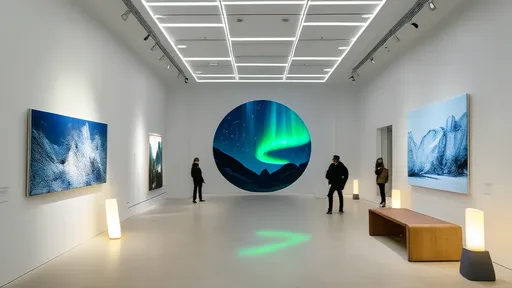
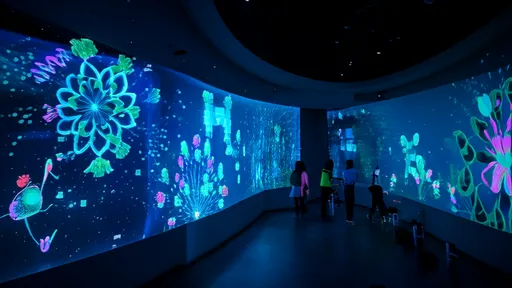
Another highlight is "Syntax of Silence," an immersive audio-visual installation by Japanese collective Team Void. Visitors enter a dark room where speakers emit sounds generated by an AI trained on ambient noise from urban and natural environments. Meanwhile, projections on the walls visualize the sound waves in real-time, creating a hypnotic dance of light and shadow. The human artists designed the system and set the parameters, but the actual sounds and visuals are produced live by the AI, making each experience unique. This piece raises fascinating questions about control and randomness, as the artists deliberately cede authority to the machine to create an ever-evolving work.
The exhibition does not shy away from the controversies surrounding AI in art. Critics have long debated whether art made with AI can truly be considered creative, or if it merely represents sophisticated mimicry. The curators at Centre Pompidou address these concerns head-on by including detailed explanations of each collaboration, highlighting the human choices involved at every stage—from selecting training data and designing algorithms to making final adjustments. The show argues that AI is not replacing artists but expanding their toolkit, enabling new forms of expression that reflect our increasingly technologically mediated world.
Moreover, the ethical dimensions of AI art are explored in works like "Data Shadows" by American artist Ryan Chen. This installation uses facial recognition software to analyze visitors and then generates abstract profiles based on their demographic data. These profiles are projected onto screens, accompanied by AI-generated text that speculates on the person's interests, habits, and even emotions. The piece is both fascinating and discomforting, forcing viewers to confront issues of privacy, bias, and the reduction of human complexity to data points. Chen's collaboration with AI here is critical and reflective, using the technology to comment on its own potential dangers.
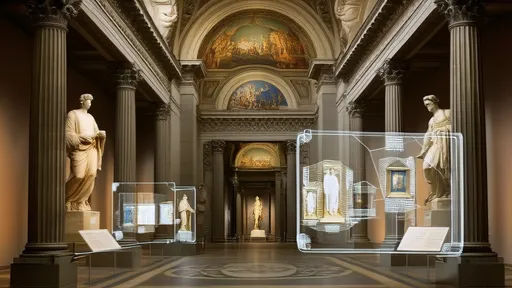
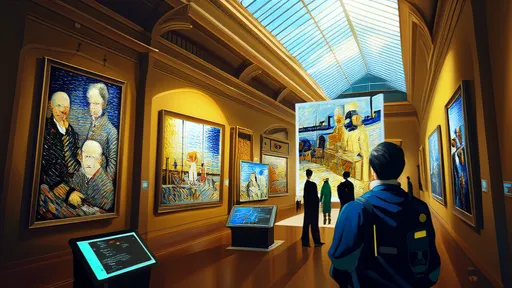
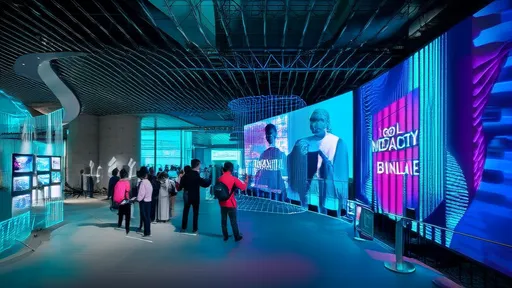
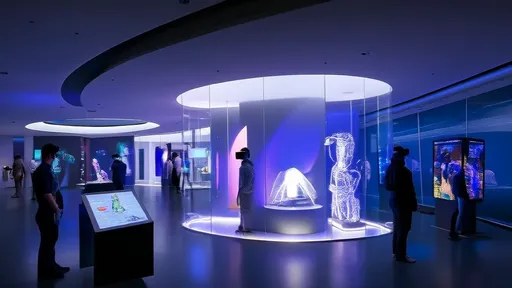
Educational components are woven throughout the exhibition, with interactive stations where visitors can learn about the different types of AI used in the works, from generative adversarial networks (GANs) to natural language processing models. These displays demystify the technology, making it accessible to those unfamiliar with computer science, and emphasize that AI is not a magical black box but a set of tools shaped by human designers. The Centre Pompidou has also organized a series of talks and workshops featuring artists, technologists, and philosophers, fostering a broader conversation about the future of creativity.
The reception of "Co-Creations" has been overwhelmingly positive, drawing crowds of art enthusiasts, tech professionals, and curious newcomers. Many visitors report that the exhibition has changed their perception of AI, moving from seeing it as a cold, mechanical force to recognizing its potential as a collaborative partner in the arts. This shift in perception is crucial as AI becomes more integrated into various aspects of society, and the art world serves as a fertile ground for exploring these changes in a tangible, emotional way.
Looking ahead, the impact of this exhibition is likely to resonate far beyond Paris. By legitimizing AI-human collaborations within one of the world's leading modern art museums, Centre Pompidou has set a precedent for other institutions to follow. It encourages artists to experiment with new technologies without fear of being dismissed as gimmicky or non-artistic, and it challenges audiences to engage with art that reflects the complexities of the digital age. The show does not provide easy answers but invites ongoing dialogue and exploration.
In conclusion, "Co-Creations" at Centre Pompidou is more than just an exhibition; it is a landmark event in the evolution of art. It celebrates the fusion of human creativity and artificial intelligence, showcasing works that are innovative, thought-provoking, and deeply expressive. As the boundaries between human and machine continue to blur, this show offers a glimpse into a future where collaboration across forms of intelligence enriches our cultural landscape, pushing art into exciting and uncharted territories.
By /Sep 11, 2025
By /Sep 11, 2025
By /Sep 11, 2025
By /Sep 11, 2025
By /Sep 11, 2025
By /Sep 11, 2025
By /Sep 11, 2025
By /Sep 11, 2025
By /Sep 11, 2025
By /Sep 11, 2025
By /Sep 11, 2025
By /Sep 11, 2025
By /Sep 11, 2025
By /Sep 11, 2025
By /Sep 11, 2025
By /Sep 11, 2025
By /Sep 11, 2025
By /Sep 11, 2025
By /Sep 11, 2025
By /Sep 11, 2025
