In the realm of audio engineering, the challenge of optimizing sound in small spaces remains both an art and a science. Unlike large venues where sound has room to breathe and develop, compact environments present unique acoustic hurdles that demand meticulous attention and creative solutions. The constraints of limited square footage, reflective surfaces, and proximity to listeners require a tailored approach to ensure clarity, balance, and immersion. Whether you're setting up a home studio, a conference room, or an intimate performance area, understanding the fundamental principles of small-space acoustics is essential for achieving professional-grade audio quality.
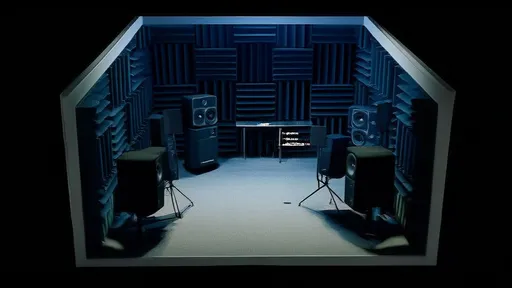
One of the primary issues in small venues is the prevalence of standing waves and reflections. These acoustic phenomena occur when sound waves bounce between parallel surfaces, such as walls, floors, and ceilings, creating peaks and nulls in the frequency response. This can lead to a boomy or muddy sound, with certain notes being exaggerated while others are lost. To combat this, strategic placement of absorption and diffusion materials is crucial. Bass traps in corners, acoustic panels on walls, and diffusers on ceilings can help break up these reflections, resulting in a more even and natural sound. It's not just about adding materials; it's about placing them where they will have the most impact, often determined through careful measurement and analysis.
Another critical aspect is speaker placement. In a small room, the position of your monitors or speakers can make or break the sound experience. Ideally, speakers should be placed to form an equilateral triangle with the primary listening position, ensuring a balanced stereo image. However, in tight spaces, you might need to experiment with angles and distances to avoid exciting room modes or creating unwanted reflections. Near-field monitoring can be particularly effective, as it emphasizes direct sound over reflected sound, reducing the room's influence on what you hear. Additionally, decoupling speakers from stands or surfaces using isolation pads can prevent vibrations from coloring the sound, preserving its integrity.
Room calibration and equalization play a significant role in fine-tuning the acoustic environment. Tools like room correction software and measurement microphones allow you to analyze the frequency response and time domain of your space, identifying problem areas that need addressing. While EQ can help tame resonant frequencies and smooth out response curves, it should be used judiciously. Over-equalization can introduce phase issues and diminish the natural character of the sound. The goal is to complement acoustic treatments with subtle adjustments, creating a cohesive and transparent listening experience. Remember, EQ is a corrective tool, not a cure-all; it works best in tandem with physical treatments.
Listener positioning is often overlooked but is just as important as speaker placement. In a small venue, every seat should offer a coherent and enjoyable auditory experience. This might involve arranging seating to avoid null points or excessive bass buildup, typically found near walls and corners. Sometimes, a slight adjustment in the orientation of chairs or the layout of the space can dramatically improve sound distribution. For multi-purpose rooms, flexible seating arrangements and movable acoustic panels can adapt the environment to different uses, from speech reinforcement to musical performances, ensuring versatility without compromising audio quality.
Finally, the human element cannot be understated. Training your ears to recognize acoustic issues is invaluable. Spend time listening critically in your space, noting how different types of content—music, speech, effects—behave. Trust your instincts but verify with measurements. Collaboration with experienced acousticians or leveraging community knowledge through forums and workshops can provide insights that pure technology might miss. Small-space acoustics is a journey of continuous refinement, where patience and persistence lead to rewarding results. By blending technical strategies with practical experimentation, you can transform even the most challenging room into a sonically pleasing environment.

By /Aug 22, 2025

By /Aug 22, 2025

By /Aug 22, 2025

By /Aug 22, 2025

By /Aug 22, 2025

By /Aug 22, 2025

By /Aug 22, 2025

By /Aug 22, 2025

By /Aug 22, 2025

By /Aug 22, 2025
By /Aug 22, 2025

By /Aug 22, 2025
By /Aug 22, 2025

By /Aug 22, 2025

By /Aug 22, 2025

By /Aug 22, 2025

By /Aug 22, 2025

By /Aug 22, 2025

By /Aug 22, 2025

By /Aug 22, 2025
