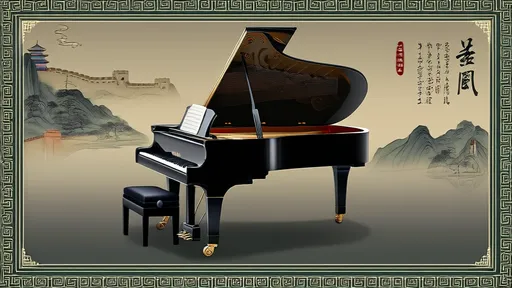
The Yellow River Piano Concerto stands as a monumental work in the landscape of modern Chinese classical music, a composition that marries Western musical forms with profound national spirit. Premiered during a period of significant cultural transformation in China, this concerto has transcended its era to become a timeless emblem of artistic synthesis. Its enduring appeal lies not merely in its technical brilliance or melodic beauty, but in its deep-rooted connection to Chinese cultural identity, expressed through a rich tapestry of folk elements, historical narratives, and symbolic resonance.
At the heart of the concerto is its inspiration drawn from the Yellow River itself, a waterway often revered as the cradle of Chinese civilization. The river’s tumultuous flow, its life-giving sustenance, and its occasional destructive power are mirrored in the music’s dynamic range—from thunderous, cascading passages to serene, flowing melodies. This natural symbol is intertwined with the nation’s collective memory, evoking themes of resilience, struggle, and rejuvenation. The concerto does not merely describe the river; it channels its spirit, making the music a vessel for cultural storytelling.
The melodic foundation of the work is deeply indebted to Chinese folk traditions, particularly the use of pentatonic scales that evoke a distinctly Eastern soundscape. Unlike Western classical music, which often relies on heptatonic scales, the pentatonic structure here creates an open, expressive quality that feels both ancient and immediate. Folk tunes from the Yellow River basin are woven into the fabric of the concerto, sometimes quoted directly, at other times subtly hinted at through rhythmic motifs or harmonic progressions. These melodies carry with them the voices of farmers, laborers, and communities along the river, embedding the music with a sense of place and history.
Rhythmically, the concerto incorporates patterns reminiscent of traditional Chinese music, such as the pulsating beats found in folk dances or the free, improvisatory flow of narrative singing styles. In movements depicting the river’s might, the piano and orchestra engage in vigorous, syncopated exchanges that mirror the collective energy of group activities like boat pulling or festival celebrations. This rhythmic vitality not only drives the music forward but also roots it in the physical and social rhythms of Chinese life.
Instrumentation plays a crucial role in blending cultural elements. While the concerto is written for a Western symphony orchestra, it often employs instruments or techniques that evoke traditional Chinese sounds. The piano, for instance, is sometimes used percussively to imitate the hammering of a yangqin (a Chinese dulcimer) or the plucking of a guzheng (a zither). Orchestral sections may mimic the timbre of Chinese ensembles, such as the shimmering strings evoking the erhu or the brass echoing the boldness of suona melodies. This fusion creates a unique sonic palette that honors both traditions without compromising either.
Beyond its musical components, the concerto is steeped in literary and philosophical symbolism. The Yellow River has long been a subject in Chinese poetry, representing both the flow of time and the endurance of the human spirit. The concerto’s structure—divided into movements that depict different aspects of the river, from its origin to its confluence with the sea—echoes classical poetic forms that contemplate nature’s grandeur and humanity’s place within it. Themes of struggle and triumph reflect Daoist and Confucian ideals of harmony through adversity, making the work a philosophical meditation as much as a musical one.
The emotional arc of the concerto is another vehicle for its national character. It moves from lyrical introspection to explosive power, mirroring the historical experiences of the Chinese people—periods of peace interrupted by upheaval, followed by renewal. This narrative quality resonates deeply with audiences who hear in the music not just notes, but stories of their ancestors, their land, and their collective identity. The final movement, with its triumphant, anthem-like climax, serves as a powerful affirmation of cultural pride and resilience.
In performance practice, the concerto has evolved to embrace both technical virtuosity and expressive depth. Pianists often emphasize the folk-inspired phrases with subtle rubato or dynamic shading to highlight their lyrical qualities, while orchestras strive to balance Western precision with the expressive freedom found in Chinese traditional music. This interpretative flexibility allows each performance to breathe with life, ensuring that the work remains relevant across generations and cultures.
Ultimately, the Yellow River Piano Concerto is more than a piece of music; it is a cultural artifact that bridges past and present, East and West. Its incorporation of national elements—from folk melodies and rhythms to philosophical themes and symbolic imagery—creates a multidimensional work that speaks to universal human experiences while remaining uniquely Chinese. As it continues to be performed and cherished worldwide, it stands as a testament to the power of art to convey identity, history, and emotion across boundaries.
By /Aug 22, 2025

By /Aug 22, 2025

By /Aug 22, 2025
By /Aug 22, 2025

By /Aug 22, 2025
By /Aug 22, 2025

By /Aug 22, 2025

By /Aug 22, 2025

By /Aug 22, 2025

By /Aug 22, 2025

By /Aug 22, 2025

By /Aug 22, 2025

By /Aug 22, 2025
By /Aug 22, 2025

By /Aug 22, 2025
By /Aug 22, 2025
By /Aug 22, 2025
By /Aug 22, 2025

By /Aug 22, 2025
By /Aug 22, 2025
